Electrolux · Generative research

Designing for health-driven cleaning

In-home studies that guided product priorities across the cleaning range.

Overview

Home cleaning across 4 regions: how people clean different surfaces, their routines, habits and motivations. 15 households and 500+ survey responses.

People cleaning at home, studied through ethnography and a survey, looking to understand routines, hacks, surfaces, and workarounds. Three layers of need emerged: Control, people decide when robot vacuums run; Ritual, cleaning fits into daily routines; and Health, allergies and other health needs shape how people clean. Health leads to the recommendation: design for health-driven cleaning, a new group to design for. Without this: products for general cleaning. Observed Learned Recommended People cleaning at home Ethnography + survey People managing a health condition Understanding routines, hacks, surfaces, and workarounds CONTROL People decide when robot vacuums run RITUAL Cleaning fits into daily routines HEALTH Allergies and other health needs shape how people clean Design for health-driven cleaning A new group to design for Without this: products for general cleaning
Role
Lead Ethnographic Researcher
Timeline
3 weeks
Teams
Global UX (3 researchers), Product Development, Innovation Strategy

Context

The team understood general cleaning tasks well. They knew less about why and how people clean in different homes and regions.

Key discoveries

How people clean, their routines, and the surfaces they care for fit into three layers. Each one shapes the others.

Insights shown are from the North America ethnography. All participants managed allergies or other health conditions.

Three nested layers of home maintenance and care. Outer: tools and technology, appliances and systems, linked to discovery 01 Control. Middle: behavioral patterns, routines, habits, and adaptations, linked to 02 Ritual. Core: cleaning motivations, personal drivers and emotional needs, linked to 03 Health. Each layer shapes the others. 03 · HEALTH Cleaning motivations Personal drivers and emotional needs 02 · RITUAL Behavioral patterns Routines, habits, and adaptations 01 · CONTROL Tools and technology Appliances and systems Each layer shapes the others.

01 · Control

People decide when the robot vacuum runs.

“Sometimes we skipped some rooms because if the child’s room is too messy… it’s going to be a disaster.”

People ran robot vacuums when home, chose rooms, and kept up care like emptying bins and washing pads.
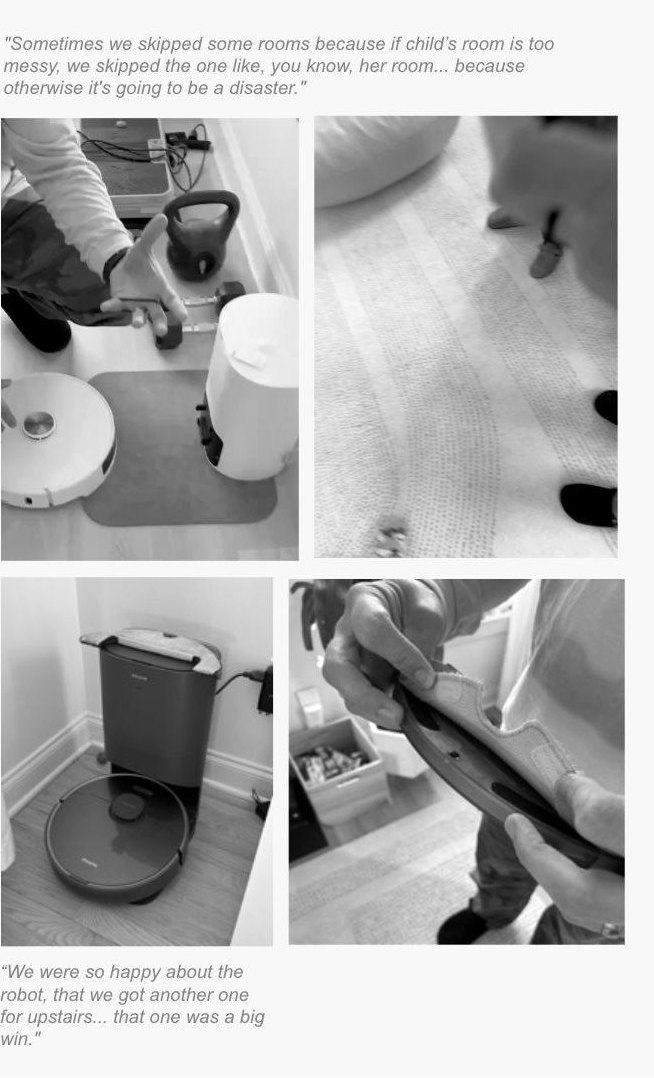
Report photos: a person docking a robot vacuum, a robot at its auto-empty dock, a hand checking a mop pad, with participant quotes
Snippet from the report

02 · Ritual

People clean a little, often.

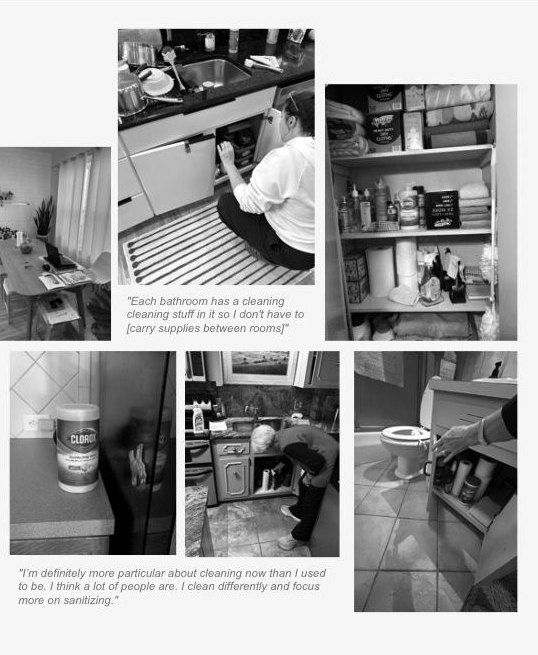
“Each bathroom has cleaning stuff in it so I don’t have to carry supplies between rooms.”

People cleaned in small moments, while cooking, before guests, and more when someone was sick.

Report photos: cleaning under the kitchen sink, a stocked cleaning shelf, and wipes left out as a reminder, with participant quotes
Snippet from the report

Supporting findings

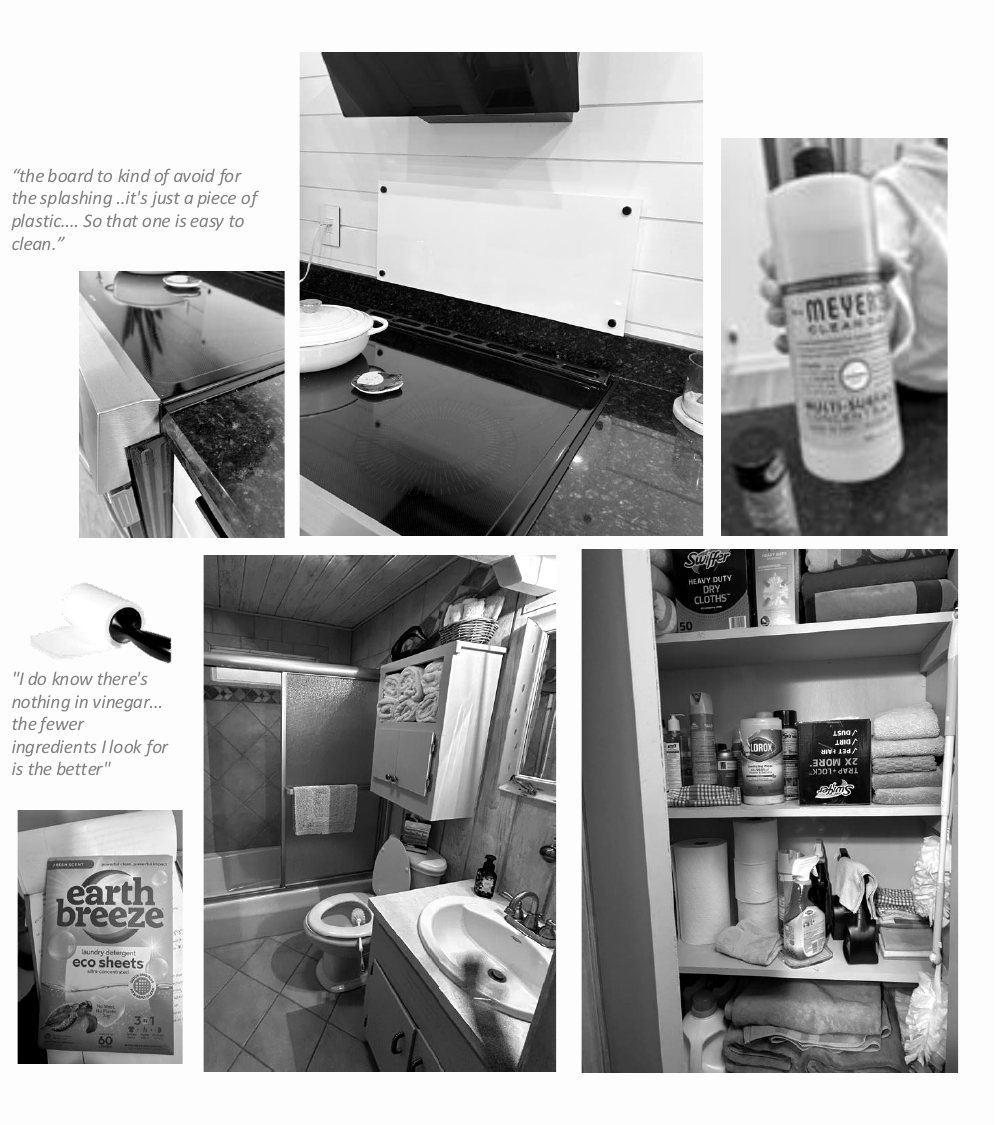
Report photos of cleaning hacks: a splash board behind the stove, cleaning supplies in each bathroom

Hacks and workarounds

People adapted products and spaces to save effort.

e.g.

  • A plastic board behind the stove to stop splashes
  • Cleaning supplies kept in every bathroom
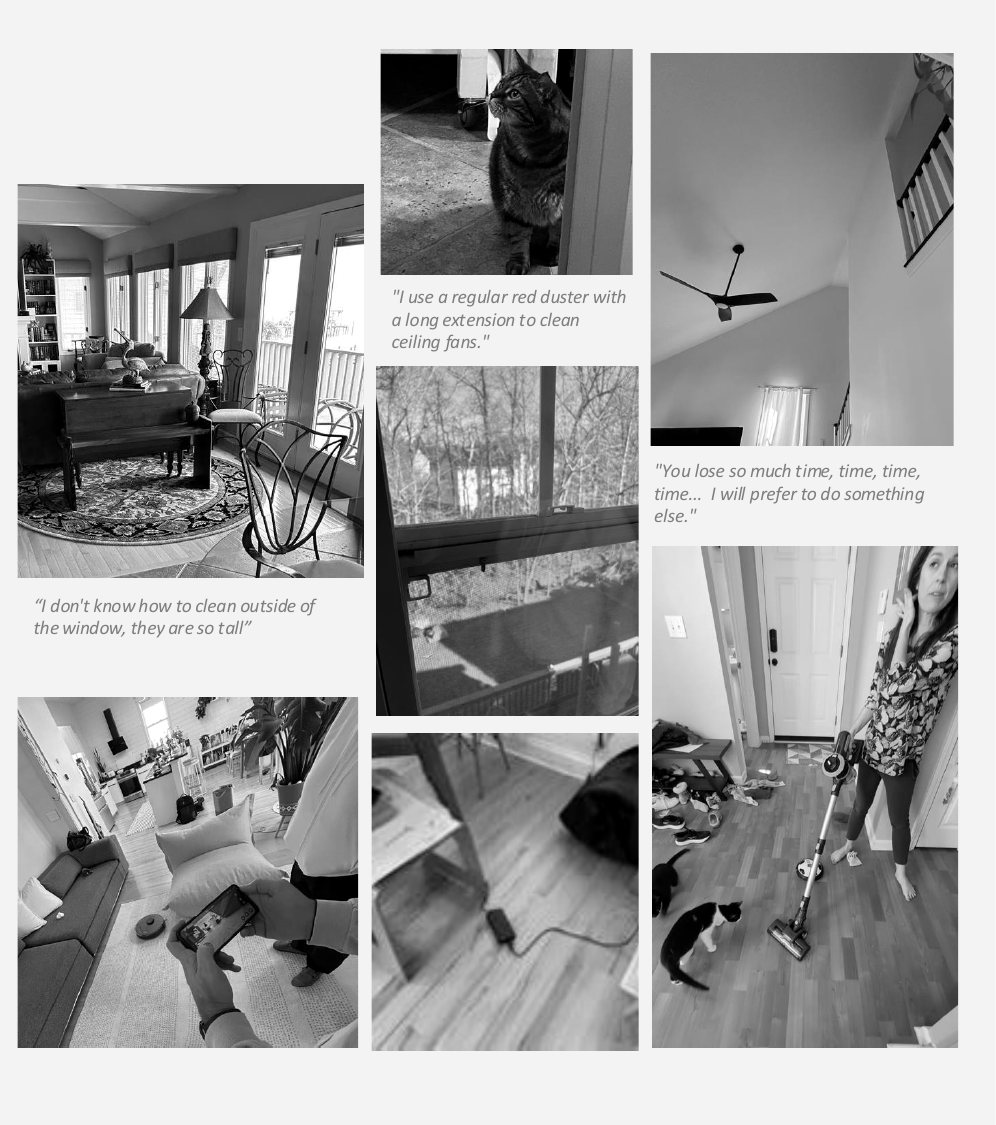
Report photos of hard-to-reach spots: tall windows, ceiling fans, and floors

Surfaces and hard-to-reach spots

Hard-to-reach spots caused the most frustration.

e.g.

  • Appliance interiors
  • Tall windows, fans, and blinds
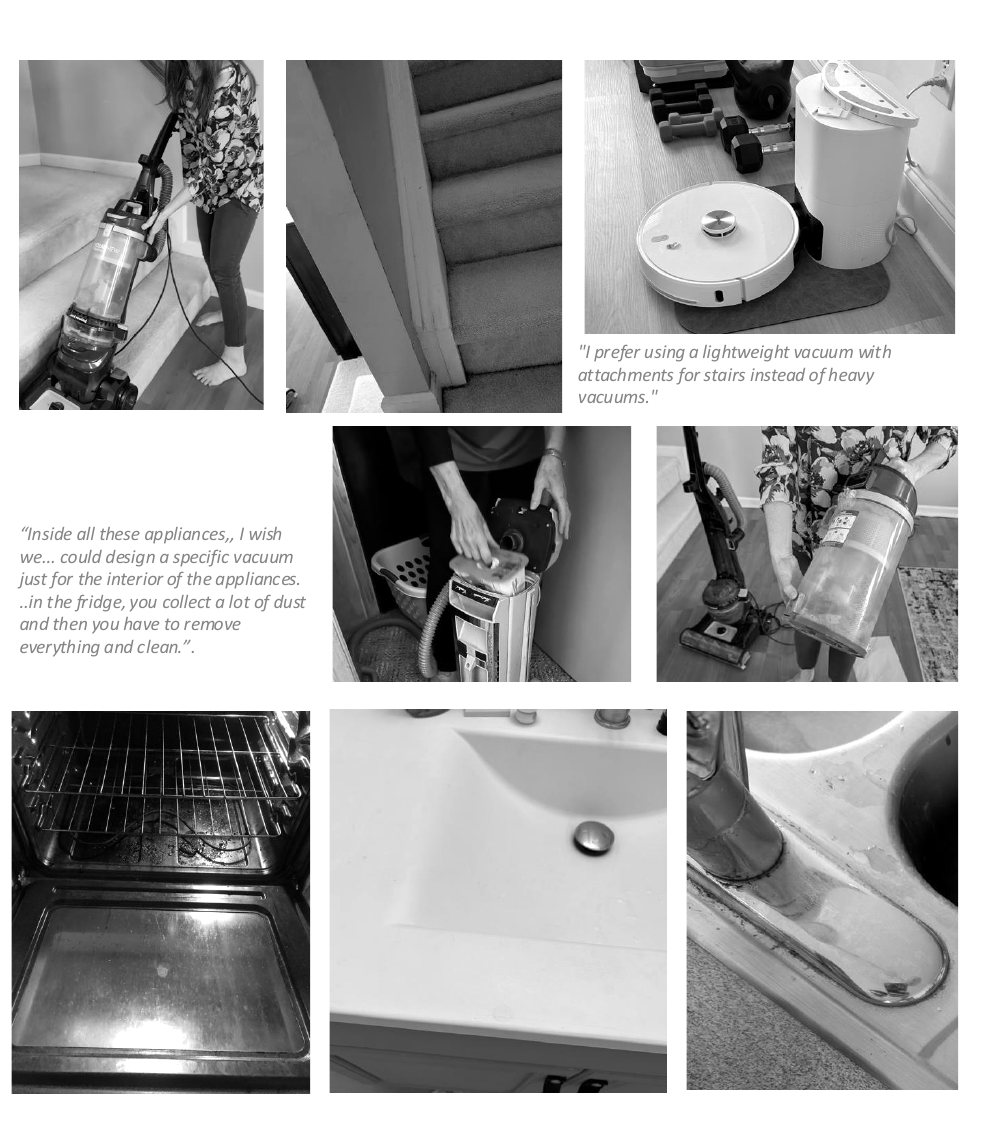
Report photos of vacuums: a bagged vacuum, a clear-bin vacuum, and appliance interiors

Vacuum personas

Two approaches to vacuuming emerged.

e.g.

  • Allergy Defender: wants sealed bags
  • Visual Inspector: wants to see the dirt
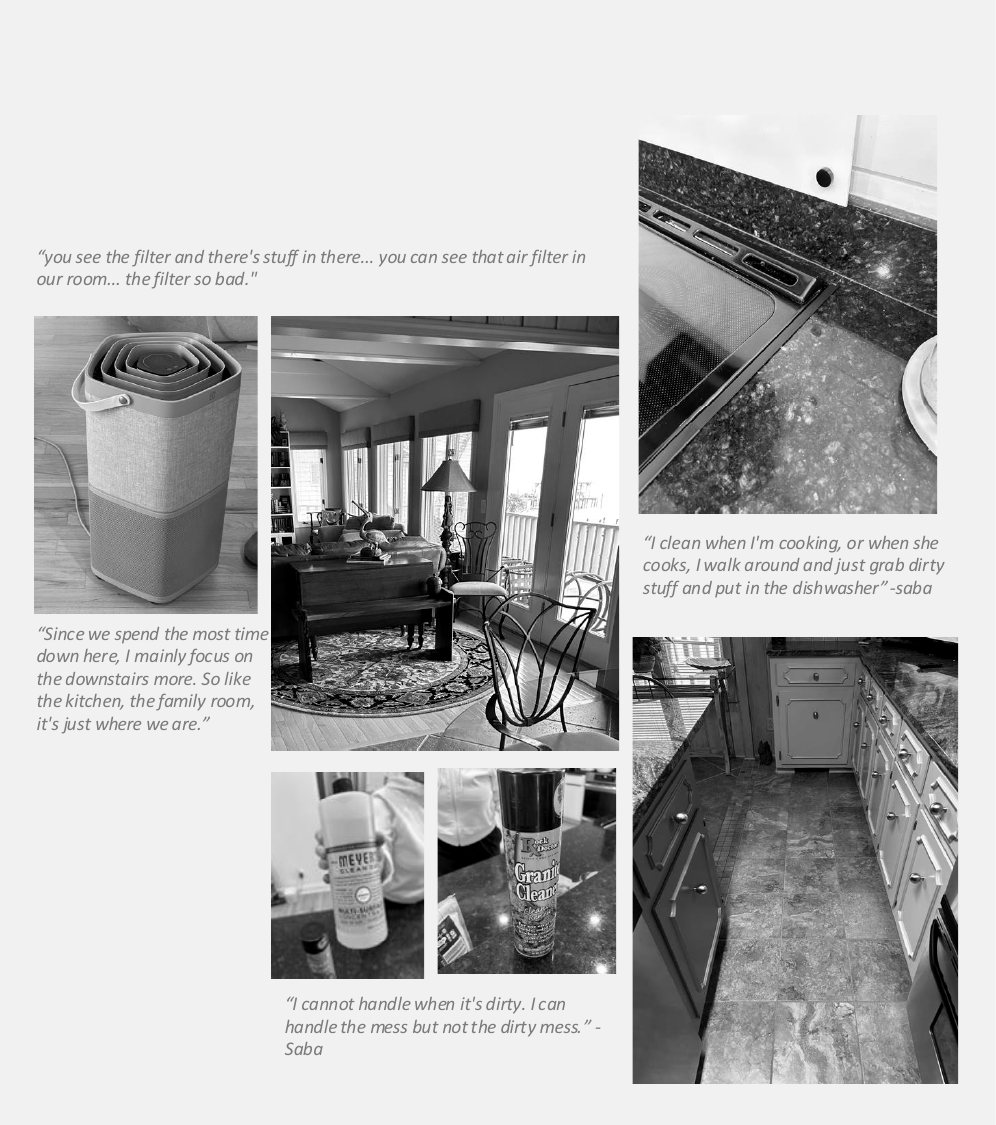
Report photos of a participant home: air purifier, kitchen counters, and cleaning products

In their words

“I can handle the mess but not the dirty mess.”

Snippets from the report. Details withheld.

03 · Health

Health needs shape how people clean.

“I’m definitely more particular about cleaning now… I clean differently and focus more on sanitizing.”

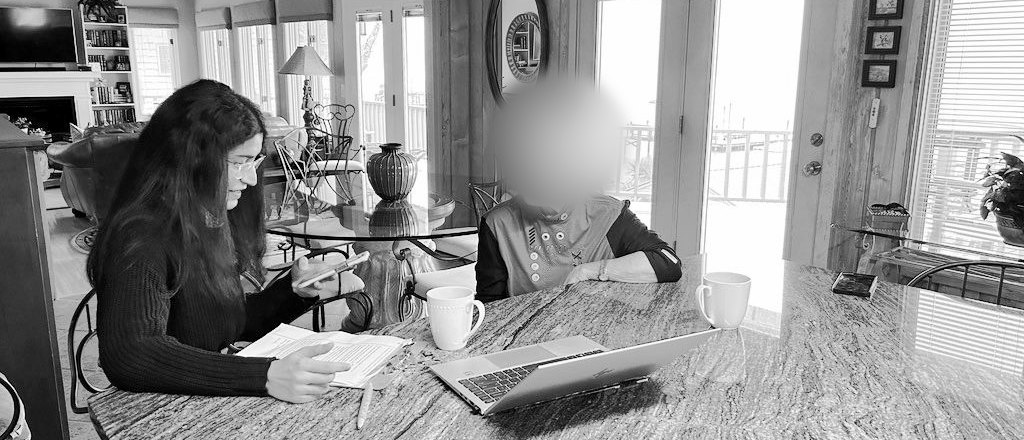
Shreya interviews a participant at her kitchen table
In a participant’s home, led and moderated by Shreya
Assumption
Design vacuums for general cleaning tasks.
Evidence
Allergies and other health needs shaped how often people cleaned and what they bought. 52% with a medical condition owned an air purifier (survey, n = 500+).
Impact
A health-focused innovation direction, and input to the 3-year roadmap.

Impact to date

How far each result has gone.

AcceptedIn the roadmap

Accepted

12

Actionable insights for product and innovation teams

In the roadmap

1

New user segment: households managing a medical condition

In the roadmap

3-year

Roadmap informed by the needs framework

Next to measure: adoption of health-focused features after launch.

Product details are under NDA. Reach out to learn more.

Research approach

The same ethnography ran in Europe, Asia, LATAM, and NA.

Dot map of the world highlighting the four regions where the same ethnography ran: North America, Latin America, Europe, and Asia. North AmericaLatin AmericaEuropeAsia
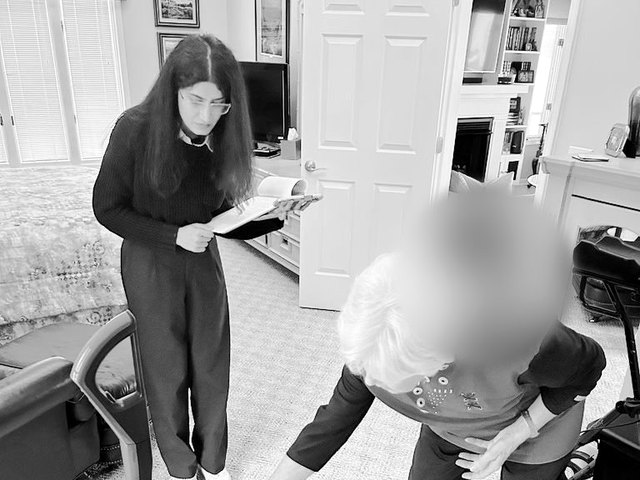
  • Shreya takes notes while a participant shows how she uses her stick vacuumEthnographyIn-home visits with 15 households to understand routines, hacks, surfaces, and workarounds
  • Survey results on how medical conditions shape cleaningSurveyn = 500+, across Europe, Asia, LATAM, and NA
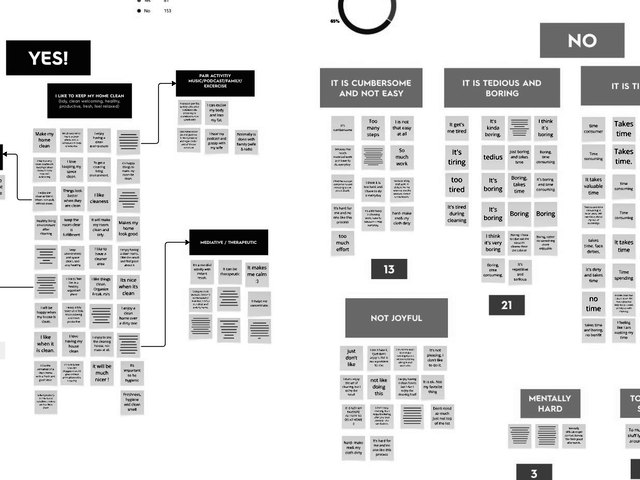
  • Affinity board grouping open-ended responses on how cleaning feelsResearcherPMDesignerEmotion mappingOpen-ended responses on how cleaning feels