Independent · Education
Learning with AI in 2045
Imagining embodied AI beyond chatbots.
Overview
AI saves effort, learning needs effort, and context decides how much to keep.
SXSW EDU 2027 · Workshop · Austin, March 13–16 ↗

Context
AI is becoming an ordinary part of learning. Most of these tools follow UX heuristics: reduce memory load, cut steps, keep things effortless. Yet cognitive effort, or productive friction, is often where deep understanding forms, and removing it by default may strip away the conditions learning needs. Early research links this to cognitive de-skilling, and overreliance, overconfidence, and weaker independent performance are emerging as costs of frictionless AI.
Sources: Lee et al., Microsoft Research, CHI 2025 · Kosmyna et al., MIT Media Lab, 2025
Literature review
Three principles for deciding how much effort an AI learning tool keeps.
1
AI makes tasks easier
Most AI tools follow these UX principles
- Reduce memory load
- Cut steps
- Recognize, not recall
Learning science suggests some effort is needed to learn.
2
Learning takes effort
Confusion, trial, and reasoning come before understanding
Based on James Nottingham's Learning Pit and Seymour Papert's "hard fun"
3
The right setting depends on context
- TaskFinish the task, or learn from doing it?
- ExpertiseIs the learner ready for the effort, or do they need the steps first?
- StakeDoes the learner care, and is it worth the effort?
- CultureWho teaches, and which effort does this community value?
How we approached it
We combine learning science with speculative design:
Builds on James Nottingham's Learning Pit, Seymour Papert's "hard fun", and Julian Bleecker's design fiction.
- Map where AI removes effortCompare common AI UX principles with how learning happens.
- Prototype the futureA speculative workshop set in 2045 explores new forms of AI.
Beyond the chatbot
The workshop asks what embodied forms AI could take in learning.
Select Elicit, Restrict, or a form of AI.
Workshop
- Method
- Speculative design workshop
- Premise
- A time machine to a 2045 learning environment, adapted from Julian Bleecker
- Task
- Bring back an object, ritual, or practice that shows AI’s role in learning, seen through a different culture
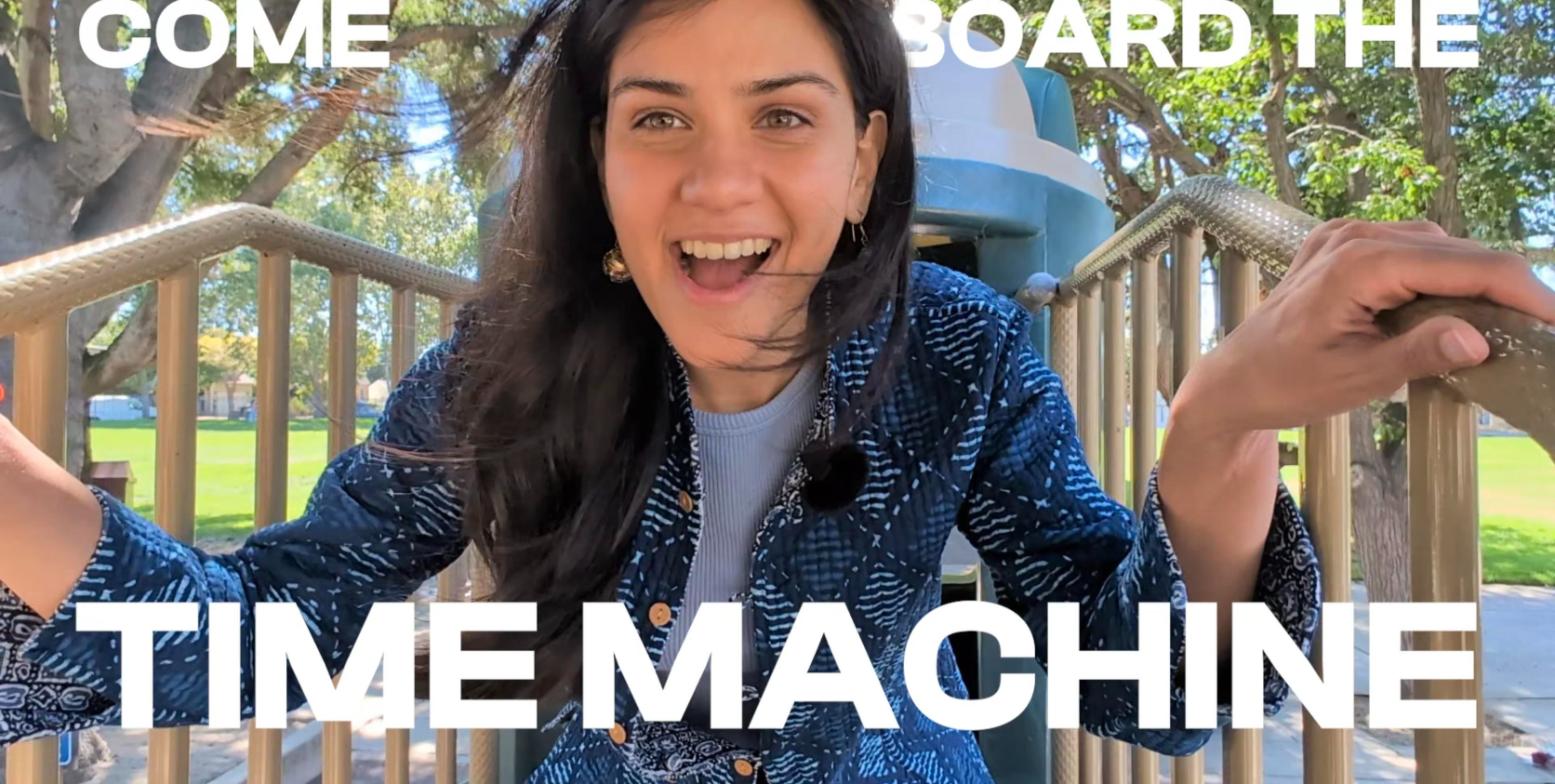 Watch the workshop on Vimeo ↗
Where it stands
Ongoing research with Sneha Arvind. Get in touch to learn more.
- ResultsHeld until publication.
- NextTest the principles with learners and educators.